//02Service
AI Voice Agents

The phone rings when you can't answer it.
- Missed callsThey ring the next number
- Busy linesCallers hang up on hold
- After hoursStraight to voicemail
- Sticky notesDetails lost after the call
- Slow callbacksUrgent jobs wait
- No follow-upDepends on someone's memory
//What changes
The same week, with it running.
Today
VS
With it
running
After hours
Today: After-hours calls go to voicemail.
With it running: They are answered, qualified and booked, at 2am the same as at 2pm.
Busy lines
Today: Callers wait while the line is busy.
With it running: Every caller is picked up at once, however many ring together.
Call notes
Today: Call details live in someone's memory.
With it running: A summary, transcript and next step are on the CRM record when the call ends.
Urgent calls
Today: Urgent calls wait for a callback.
With it running: Urgent calls go straight to a person, with the context already gathered.
//Is it for you
Built for some businesses. Not all of them.
A good fit if
- Calls drive your revenue and some go unanswered
- Your team answers the same questions by phone all day
- You book appointments, visits or consultations
Spend it elsewhere if
- You get a handful of calls a week and answer every one
- Every call needs a specialist's judgement from the first word
- You want callers to believe they are talking to a person
//How it runs · 04 steps
One call, from the first ring to the CRM.
- Step 1: Call
9pm. You are off the clock. The phone rings.
Answered on the first ring, at 2am and on a bank holiday, in your tone.
- Evenings, weekends, bank holidays
- Every caller, however many at once
- In your tone, not a robot's
 01 · Call
- Step 2: Qualify
Is it urgent? It finds out.
The questions you would ask, asked the way you ask them.
- Your questions, in your order
- Urgent calls go straight to a person
- Context gathered before the hand-off
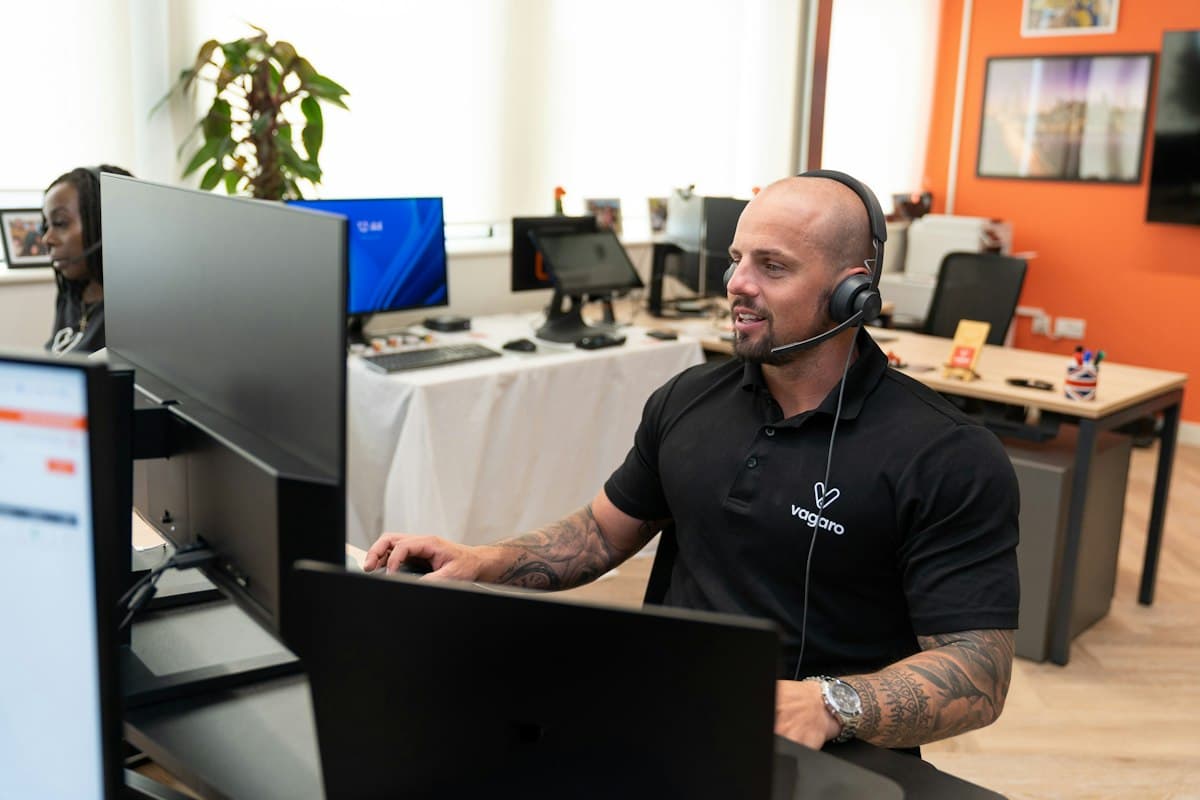 02 · Qualify
- Step 3: Book
The job is booked before they hang up.
Straight into your calendar, with the slot actually held.
- The slot is actually held
- Caller's details attached
- Where your team already looks
 03 · Book
- Step 4: Sync CRM
By the time you look, it is all written down.
Summary, transcript and the next step written onto the record.
- A summary of the call
- The full transcript
- The next step on the record
 04 · Sync CRM
That is the whole run. Want it mapped to your business?
//In practice
What it looks like on an ordinary Tuesday.
Answered at 2am the same as 2pm.
Every call picked up on the first ring, qualified and booked, whoever is on shift and however late it is.

Booked straight into your calendar.
Appointments land where your team already looks, with the caller's details and a summary attached.

You stay on the job. The phone is handled.
Urgent calls go straight to a person with the context already gathered. Everything else is booked and written into your CRM.

//What it is
What are AI Voice Agents?
//What you get
Everything that ships with it
- 01
Inbound answering and qualification, 24/7
- 02
Appointments booked straight into your calendar
- 03
Outbound follow-up and reactivation
- 04
Call summaries written into your CRM
- 05
Escalation rules and a warm hand-off to a person
//Questions
AI Voice Agents, answered
An AI voice agent is a phone agent that answers calls on the first ring, holds a natural conversation, qualifies the caller, books appointments and writes the notes into your CRM, 24 hours a day, with a warm transfer to a person when it matters.
Yes. The agent connects to your current telephony or a new number, in your tone of voice and language, and follows escalation rules you set.
Two to three weeks from the first call, including real-call testing before it takes customer calls. When something is urgent it can be live in five days; a complex requirement can take a little longer, and you know that up front.
The agent is not built to pretend to be a person. It introduces itself, speaks naturally, and if a caller asks whether they are talking to a human it says what it is and offers to put them through. Trying to pass it off as staff is how businesses lose the callers they were trying to keep.
It follows the escalation rules you set: transfer to a person, take a message, or book a callback. It does not invent an answer to fill the silence. Either way the call is summarised and written into your CRM, so whoever picks it up already knows what was said.
Yes. Concurrent calls are the point: ten people ringing at once are all answered on the first ring instead of nine hearing hold music or voicemail. This is usually the difference a business notices first, because the calls it was quietly losing were the ones that came in while the line was busy.
Whatever you give it: services, hours, pricing, service area, what you do not take on, and how you want awkward questions handled. That knowledge is editable, so when something changes you update it once and every future call uses it. It also needs an owner and a periodic check, because an agent confidently quoting last year's price is worse than no agent.
//Next step